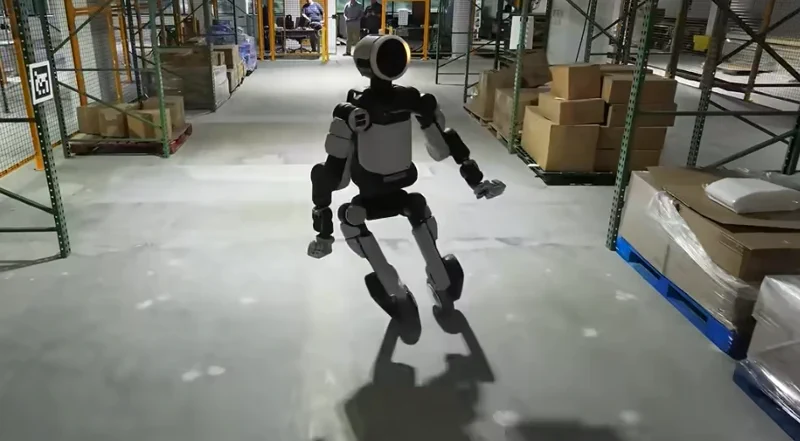
Just when you thought Boston Dynamics’ Atlas had mastered the art of not falling over, the company has decided to bolt a pair of off-the-shelf scooter wheels to its ankles. But before you envision a future of robotic roller derby, know this: it’s not a product pivot. It’s a brutalist experiment designed to push the humanoid’s actuators to their absolute breaking point.
In a video and blog post, the Hyundai-owned company makes it clear this wheeled configuration is strictly a “research testbed.” The goal, according to Atlas controls engineer Andy Woo, is to see how the robot’s motors and whole-body reinforcement learning (RL) controller behave together under extreme stress. The experiment combines classical motor controls with an advanced RL policy trained over millions of simulation runs. This sim-to-real transfer has yielded some surprising results, including a 360-degree spinning jump that was based on human motion capture and reportedly “worked on the first try.” The AI also independently figured out how to use the wheels to roll and drift through side-dash maneuvers—a feat impossible for its bipedal version.
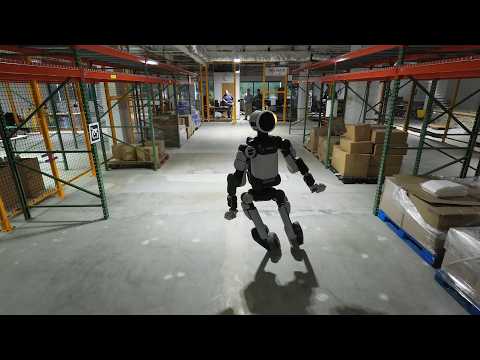
The hardware modification was surprisingly simple, requiring only a single custom adapter to mount the wheels. For Woo, the project has been an absolute blast. “I haven’t touched my gaming rig the whole time I’ve been working on this because it’s just much more fun,” he admitted in the video.
Why is this important?
This experiment is less about creating a roller-skating robot and more about building resilience for when things inevitably go wrong. By intentionally stressing the hardware, Boston Dynamics is gathering crucial data on actuator limits and failure modes. The next step, as Woo notes, is to explore how reinforcement learning can create “emergent behaviors to respond to those actuation failures.” This is the unglamorous, essential work required to move humanoids from controlled lab demos to reliable tools that can function in the chaotic real world, even when a part gives out. The wheels are just a chaotic, data-rich means to a much more robust end.