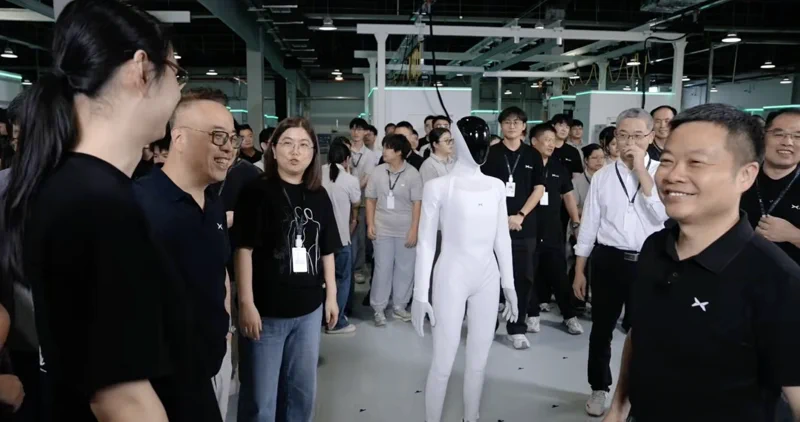
In a move that screams “the future is now, and it’s being assembled next to a sedan,” XPENG Robotics has powered on what it’s billing as the world’s first automated production line for general-purpose humanoid robots. The inaugural graduate of this new facility has already, and quite literally, walked off the assembly line under its own power. No champagne bottle, just the quiet hum of servos heralding a new era of manufacturing.

This isn’t just a lab experiment; it’s a statement of intent from the robotics division of Chinese electric vehicle powerhouse XPENG. The company aims to leverage its hard-won expertise in automotive mass production—a field known for its brutal efficiency and unforgiving supply chains—and apply it directly to the burgeoning field of humanoid robotics. The video released by the company shows the sleek, white-and-black robot taking its first steps on the factory floor, surrounded by a crowd of understandably pleased engineers.
Of course, let’s keep our circuits from overheating. A robot walking in a straight line off an assembly platform is a light-year away from it performing useful, dynamic tasks in an unpredictable environment. The real challenges in robotics remain grounded in software, AI, and robustly interacting with a world not designed for automatons. Competitors like Tesla’s Optimus and Figure’s 01 are tackling the same monumental software hurdles.
Why is this important?
The key takeaway here isn’t just the robot itself, but the production line. While other companies are building bespoke, almost artisanal humanoids in labs, XPENG is building the factory to build the factory-builders. By applying automotive-grade manufacturing principles, they’re signaling a strategic push to solve the problem of scale and cost from day one. If XPENG can successfully bring the economics of car manufacturing to the world of humanoids, it could dramatically lower the barrier to entry and accelerate adoption across industries. The robot may be taking baby steps, but the factory is making a giant leap.