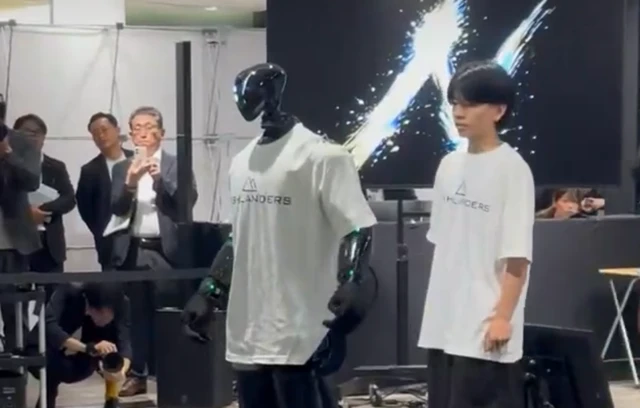
Mitsubishi Motors Corporation, a company more familiar with building Outlanders than androids, is officially pivoting to humanoid robots. The Japanese automaker announced on July 9, 2026, that it has signed a Memorandum of Understanding with Highlanders, Inc., a robotics startup spun out of the University of Tokyo. The ambitious plan involves converting idle sections of Mitsubishi’s Kyoto car manufacturing plant to mass-produce “Physical AI” humanoids, with production aiming to kick off as early as 2027.
The partnership aims to tackle Japan’s pressing labor shortages by combining Highlanders’ robotics and AI development with Mitsubishi’s deep expertise in mass production. While Highlanders develops the brains and bodies, Mitsubishi provides the crucial—and notoriously difficult—manufacturing scale. According to the announcement, Mitsubishi has already invested in the startup and plans to increase its stake. The target production capacity is a hefty 1,000 units per month.
The first customer for these new robots will be Mitsubishi itself. The company plans to deploy the humanoids in its own factories for tasks like parts transport and assembly, effectively field-testing the products on its own dime. This “eat your own dog food” strategy is designed to rapidly gather operational data and refine the robots for real-world industrial challenges.
Why is this important?
Mitsubishi’s venture is the latest, and perhaps one of the most concrete, examples of a powerful trend: legacy automakers are becoming kingmakers in the world of humanoid robotics. By offering their vast manufacturing infrastructure, companies like Mitsubishi are solving the biggest hurdle for robotics startups, which excel at R&D but flounder at production.
This move places Mitsubishi in a growing club alongside BMW (partnered with Figure), Mercedes-Benz (working with Apptronik), and Hyundai (which owns Boston Dynamics). These alliances are forming a new industrial backbone, pairing automotive scale with startup agility. While some, like Tesla, are determined to go it alone, this partnership model suggests the fastest way to get thousands of humanoids off the drawing board and onto the factory floor is to use the factories that are already there.