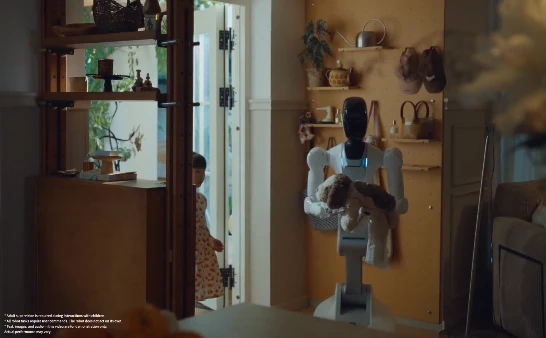
The dream of a robotic butler tidying up your messy apartment just took a strange, pragmatic step forward in China. Shenzhen-based startup X Square Robot has unleashed its wheeled humanoid robots into the chaotic world of home cleaning, but this is no solo mission. For roughly 149 RMB (about $22), residents in Shenzhen and Beijing can book a cleaning service where a robot arrives accompanied by a professional human cleaner.
The service, launched in partnership with Chinese e-commerce giant 58.com, has reportedly been booked solid for weeks. The division of labor is clear: the robot, likely the company’s Quanta X2 model, handles repetitive, structured tasks like organizing shoes, clearing tables, and picking up trash. The human partner tackles complex, deep-cleaning jobs that still require judgment and dexterity, like scrubbing kitchens and bathrooms. X Square has been candid about the robot’s current limitations, noting on social media that they “may move slowly, hesitate, and sometimes look a little clumsy.”
This isn’t just about clean floors; it’s a clever, large-scale experiment in training embodied AI. At its “Born to Bot, Bot to Family” event on April 23, 2026, the company announced its robots would enter real homes within 35 days, a bold claim it has now delivered on. The entire operation is designed to feed X Square’s WALL series of foundation models with invaluable data from unpredictable, real-world home environments—the final frontier for general-purpose robots.
Why is this important?
While competitors are still demonstrating flashy but brittle demos in controlled labs, X Square is stress-testing its AI in the wild and getting customers to pay for the privilege. This human-in-the-loop model brilliantly sidesteps the current reliability gap in robotics. It allows the company to deploy a 70%-capable robot today, rather than waiting years for a 99% autonomous one.
By charging the same price as a traditional cleaning service, X Square has created a powerful feedback loop: it generates revenue, gathers immense quantities of training data from diverse households, and builds public familiarity with home robots. It’s a refreshingly honest and practical approach to commercializing a technology that is perpetually “just around the corner.” The future of home robotics, it seems, will be a tag-team effort for the foreseeable future.