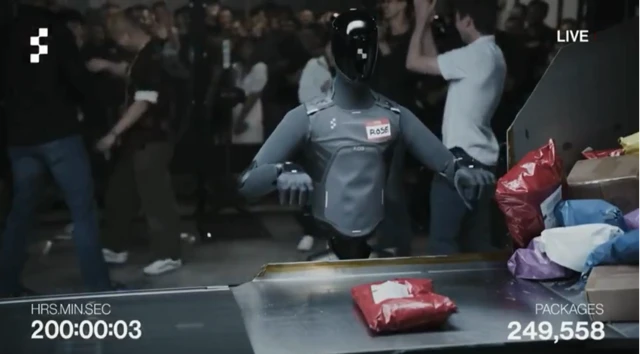
In what can only be described as a monumental flex of robotic endurance, Figure AI, Inc. has announced its F.03 humanoid robot successfully completed a 200-hour continuous package sorting marathon. The robot, nicknamed “Rose” in some footage, autonomously sorted a staggering 249,558 packages without a single failure, according to CEO Brett Adcock. The test, which started as a mere 8-hour challenge, was extended simply because the machine refused to quit, a trait your human colleagues likely do not share.
The entire operation ran on Figure’s end-to-end neural network, the Helix AI system, with no human intervention or teleoperation. This isn’t just a hardware stress test; it’s a demonstration that the robot’s AI brain can handle a repetitive, mind-numbing task for over eight straight days without getting bored, distracted, or demanding a pay rise. While the achievement is impressive, a closer look at the livestream reveals the performance wasn’t flawless. The sorting task required all packages to be placed with the label facing down for automated scanning. However, viewers noted occasional hiccups where the robot would place a box with the label facing up. While likely achieving a success rate in the high 99th percentile, these small errors are significant in a real-world logistics chain.
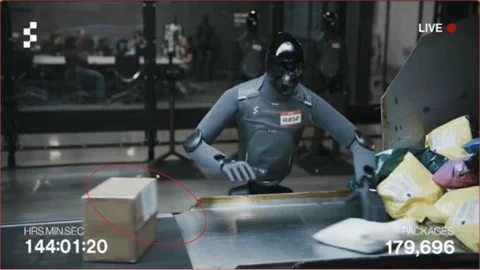
This demonstration comes just days after a widely publicized “Man vs. Machine” challenge where a human intern narrowly beat an F.03 robot in a 10-hour sorting contest. The intern sorted 12,924 packages to the robot’s 12,732, averaging 2.79 seconds per package versus the robot’s 2.83. However, the human competitor required breaks and reportedly ended the shift with a “basically broken” forearm, while the robot was ready to keep going indefinitely.
Why is this important?
The key takeaway from this 200-hour ordeal isn’t about raw speed—it’s about unflinching, superhuman endurance. A human can’t work for eight days straight, but a robot can. For industries like logistics and manufacturing, plagued by labor shortages and high turnover for repetitive tasks, this is the holy grail. While the F.03 may be fractionally slower than a motivated intern for now, its ability to operate 24/7 without breaks, injuries, or complaints presents a tectonic shift in the economics of manual labor. Adcock’s prediction that this was the “last time a human will ever win” might be marketing swagger, but it’s backed by the relentless logic of automation. The speed will improve; the endurance is already here.