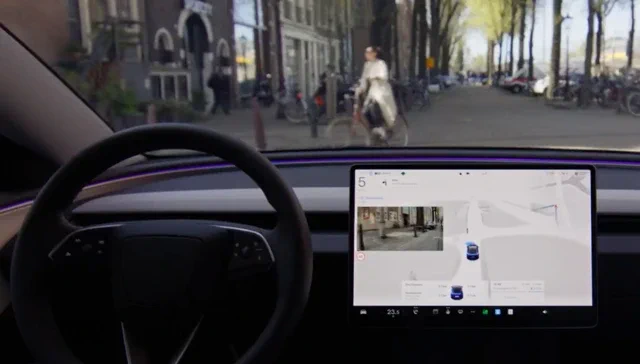
Tesla, Inc. has finally broken through the European regulatory wall, securing its first-ever approval to launch its Full Self-Driving (Supervised) software in the Netherlands. The announcement, made on April 10, 2026, confirms that Dutch Tesla owners will soon be able to use the advanced driver-assist system, a feature long available in North America. However, a closer look at the fine print reveals this is less of a robotaxi revolution and more of a heavily chaperoned debut.
The Dutch vehicle authority, RDW (Rijksdienst voor het Wegverkeer), issued what it calls a “European type approval with provisional validity in the Netherlands” after an exhaustive 18-month evaluation. The RDW was quick to pour cold water on any notions of true autonomy, stating unequivocally that a vehicle with FSD Supervised is not self-driving. It is legally classified as a Level 2 driver-assist system, meaning the driver remains fully responsible and must be prepared to take control at a moment’s notice.
In its announcement, Tesla claimed, “No other vehicle can do this.” This statement is, to put it mildly, marketing bravado. The RDW itself noted that other manufacturers, such as BMW and Ford, already have approvals for similar hands-off driving systems in Europe. The approval places FSD Supervised under the same regulatory framework as these competitors, requiring constant driver monitoring via in-car sensors to ensure attentiveness.
Why is this important?
This approval is a significant, if incremental, victory for Tesla. It establishes a critical regulatory foothold in the notoriously cautious European market, which operates on a “type approval” basis, unlike the “self-certification” model in the United States. While the Dutch approval doesn’t automatically apply to the entire EU, it creates a pathway for other member states to recognize the certification, with a broader rollout potentially happening by summer 2026.
Ultimately, the Netherlands is now the official proving ground for FSD in Europe. The “provisional” nature of the approval means regulators will be watching closely. For Tesla, this is a chance to gather crucial data and prove its system can handle Europe’s complex roads. For drivers, it’s a chance to experience a more advanced driver-assist system, as long as they remember they’re still the ones in charge—no reading the newspaper behind the wheel, as the RDW explicitly warned. The future of mobility may have arrived in the Netherlands, but it’s clear it will be supervised for the foreseeable future.