If you picture a military drone, you’re probably thinking of exotic composites and stealth coatings. You’re probably not thinking of waxed cardboard held together with rubber bands. But Australian company SYPAQ Systems is proving that battlefield effectiveness can come in a flat-pack box. The firm has been shipping its Corvo Precision Payload Delivery System (PPDS) drones to Ukraine, where they’re being used for everything from last-mile resupply to reconnaissance and, reportedly, kamikaze missions. The most shocking spec? The price tag, which sits at a reported $3,500 per unit.
The Corvo PPDS is essentially a military-grade IKEA project. Shipped as a kit, the airframe is made from waxed foamboard, making it lightweight and water-resistant. It boasts a range of up to 120 km (75 miles), a cruise speed of 60 km/h, and can carry a payload of 3 kg, though it can be pushed to 5 kg. While the avionics and motor are designed for reuse, the airframe itself is completely disposable.
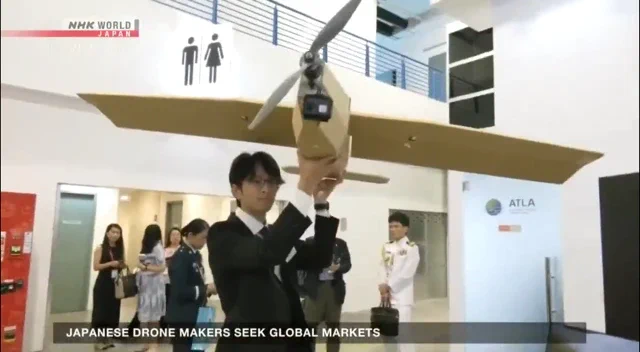
The drone’s surprising utility has captured public attention, though some viral posts conflate its specs with other emerging systems. The 120 km/h speed and five-minute assembly time often cited actually belong to a different cardboard drone: the AirKamuy 150 from Japanese startup AirKamuy Inc. That company operates under the chillingly effective motto that its technology can turn “every cardboard factory… into an arsenal.”
Why is this important?
This isn’t just about a clever piece of engineering; it’s about a paradigm shift in military procurement and doctrine. The Corvo PPDS is a prime example of an “attritable” system—an asset cheap enough to be lost without significant financial or strategic impact. When a drone costs less than a high-end laptop, commanders can take risks that would be unthinkable with a multi-million dollar platform.
This trend toward disposable, low-cost aerial systems is gaining momentum globally. The U.S. Army, for instance, has developed the Attritable Battlefield Enabler (ABE 1.01), a 3D-printed combat drone that costs a mere $740 to produce at scale. Whether built from cardboard in a box factory or 3D-printed near the front lines, the message is clear: the future of tactical air power is becoming cheaper, more accessible, and profoundly more expendable.