In a move that proves the future of farming is less about barbed wire and more about big data, New Zealand-based ag-tech startup Halter is reportedly in talks to raise a new funding round at a jaw-dropping $2 billion valuation. The round is expected to be led by Peter Thiel’s Founders Fund, a long-time backer of the company, signaling a massive bet on the digitization of dairy and beef.
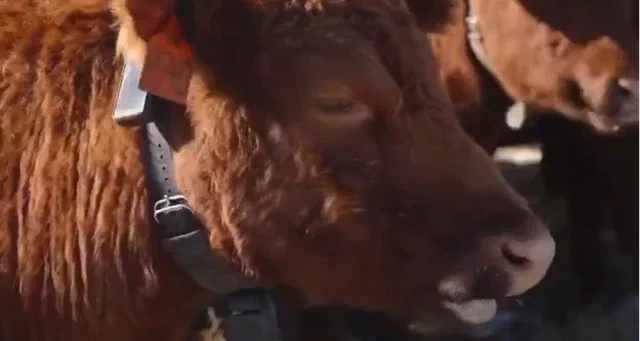
Halter’s proposition is deceptively simple: replace thousands of miles of physical fences with a solar-powered smart collar and a smartphone app. Farmers can draw a virtual fence on a map, and the GPS-enabled collars keep the herd in check using a sequence of directional audio cues and vibrations. If a cow ignores the gentle nudges, the collar can deliver a low-energy electric pulse—a tiny fraction of what a standard electric fence puts out—to reinforce the boundary. The system allows farmers to move entire herds to fresh pasture or the milking shed with a single tap on their phone.
The company, founded in 2016 by Craig Piggott, already has its collars on nearly 650,000 cows across New Zealand, Australia, and the United States. Beyond virtual fencing, the collars serve as a 24/7 health monitor, tracking temperature, chewing patterns, and movement to predict things like peak mating times or detect early signs of illness using what the company calls “cowgorithms.” For a monthly fee starting around $5.70 per cow, farmers are saving an estimated 20 to 40 hours of labor a week and avoiding the steep costs of fence installation, which can run up to $20,000 per mile.
Why is this important?
Halter isn’t just selling a fancy cowbell; it’s pitching a complete operating system for modern ranching. This move represents a fundamental shift from capital-intensive physical infrastructure to a software-as-a-service (SaaS) model for livestock management. By turning fields into dynamic, software-defined pastures, the technology enables more efficient rotational grazing, which improves soil health and maximizes land use. As the agricultural industry grapples with labor shortages and the need for more sustainable practices, Halter’s $2 billion valuation suggests that investors are betting the farm on AI-driven automation—and that the cows are finally coming home to the cloud.