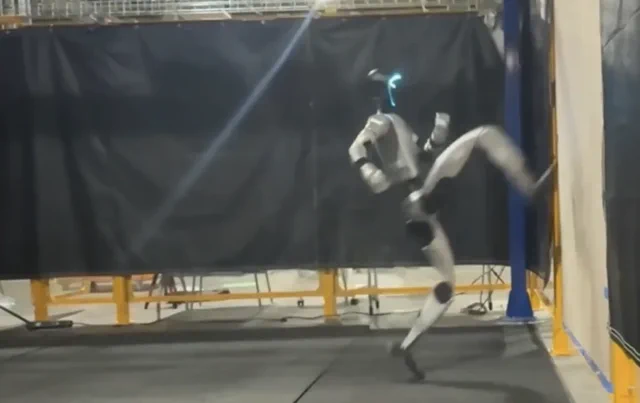
While most of the robotics industry is teaching humanoids to fold laundry and make coffee, San Francisco-based Foundation Robotics is taking a decidedly different, and darker, path. In a recent interview, founder Sankaet Pathak confirmed his company is developing its Phantom humanoid for defense applications and has explored pilot activities connected to Ukraine. This pivot from domestic helper to potential soldier marks a stark departure from the sanitized vision of our robotic future.
Pathak’s philosophy rejects the “companion bot” trend embraced by competitors. His stated goal is to build “superhero” robots capable of operating in harsh environments, constructing critical infrastructure, and performing difficult defense-related tasks. In the discussion, he revealed that Foundation Robotics is roughly split between commercial and defense work, focusing on use cases like logistics, reconnaissance, and supply pickup. Recent reports have confirmed that two Phantom MK-1 units were sent to Ukraine in February for frontline reconnaissance support.
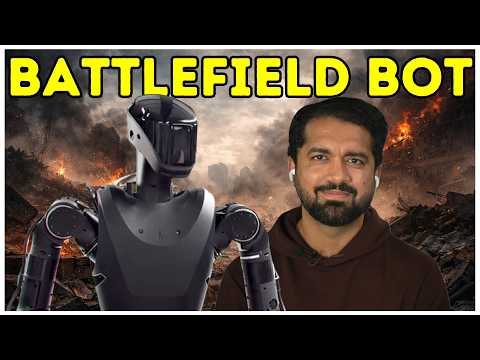
The company’s approach is rooted in creating hardware that is exceptionally robust. Pathak detailed a testing regimen that includes forcing the robot to walk “blind”—without visual input for its whole-body controller, relying instead on reflexive balancing analogous to a human spinal cord. This is to ensure the robot can handle unexpected impacts and terrain, a critical requirement for any real-world deployment, especially in a conflict zone.
Why is this important?
The explicit turn towards military applications by a humanoid robotics company signals a major shift in the industry. While unmanned ground and aerial vehicles are common in modern warfare, the deployment of a bipedal, human-sized robot raises fresh and urgent ethical questions. Battlefield logistics and reconnaissance in environments inaccessible to drones could become one of the first major use cases for these advanced machines, justifying their high cost where human lives are at stake. Foundation’s work suggests the future of advanced robotics may be less about household convenience and more about the grim realities of infrastructure and defense in extreme environments.