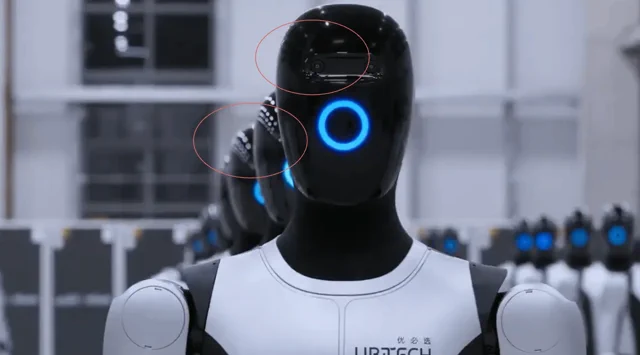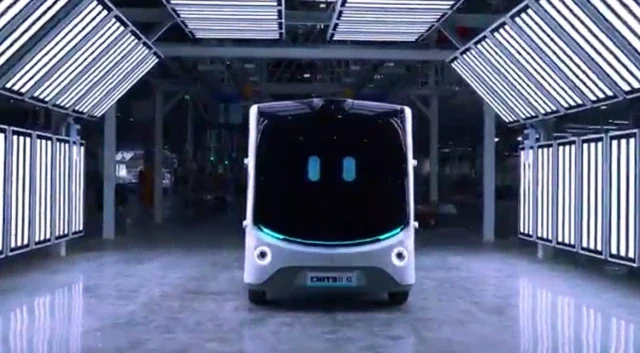
In a move that feels less like a press release and more like the opening scene of a sci-fi blockbuster, UBTECH Robotics Corp. announced that its subsidiary UQI has pushed its first autonomous logistics vehicles off the assembly line. The Chitu α vehicle successfully cleared its Production Validation Test (PVT) at a Foxconn New Energy Vehicle R&D Centre, a critical step that basically means they’re done with rehearsals and are ready for the main performance: mass production.
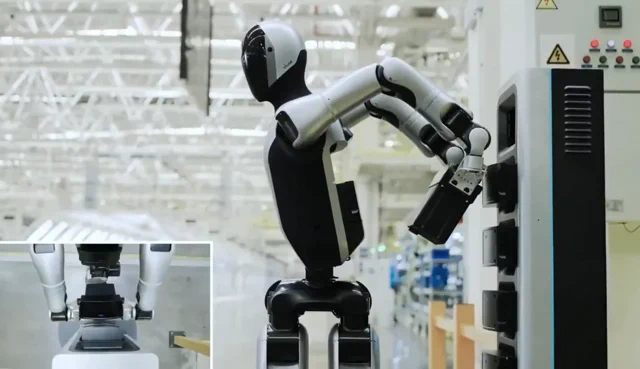
The achievement validates the entire automotive-grade manufacturing process, a closed-loop system managed within Foxconn’s notoriously efficient smart manufacturing ecosystem. But the real kicker isn’t just another electric cart rolling off the line. The announcement casually mentioned that the process involves a “new paradigm” where UBTECH’s Walker S2 industrial humanoid robots work in concert with other autonomous mobile robots. That’s right, bipedal robots are now part of the automotive assembly crew.
This partnership between the robotics specialist and the manufacturing titan isn’t new, but this is one of its most tangible results. The Walker S2 isn’t just a showpiece; it’s part of a growing trend where humanoids are being deployed for actual factory work, from quality inspection to material handling, at major manufacturing sites.
Why is this important?
This isn’t merely about automating a warehouse. It’s a proof of concept for the factory of the future. By successfully passing the PVT—a rigorous phase of testing that ensures every component and process is ready for scale—UBTECH and Foxconn are demonstrating a viable, robot-integrated manufacturing blueprint. The collaboration combines Foxconn’s unparalleled manufacturing scale with UBTECH’s advanced robotics to create a production line where humanoid robots perform complex tasks that were, until recently, strictly human domains. If this model scales, it could fundamentally redefine labor, efficiency, and what it means to build complex machines.