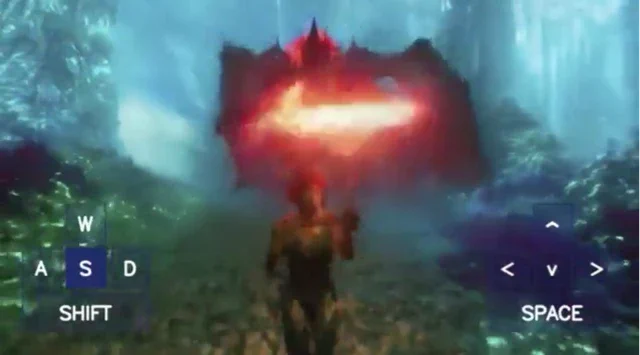
Roblox Corporation has thrown down the gauntlet in the generative AI arms race, announcing its ambitious “world model” capable of what it calls “real-time dreaming”: generating fully playable, interactive worlds from simple text or image prompts. The technology, powered by the new Cube Foundation Model, aims to let creators and even players conjure up entire experiences on the fly, moving far beyond the static 3D objects made by other generative tools.
The company revealed its real-time, action-conditioned world model is currently running internally at a modest 16fps at 832x480p resolution. While other AIs are busy making non-interactive video clips, Roblox’s model is trained on a treasure trove of proprietary data: years of 3D avatar and world interactions from its massive user base. This allows the AI to understand not just what things look like, but how they should work. The system, dubbed 4D generation, adds the dimension of interactivity, allowing a user to prompt a car into existence and immediately drive it.
To demonstrate its power, Roblox showcased an AI upsampling technology that transformed its classic, blocky “Crossroads” map into a detailed fantasy world from a single user prompt. This highlights the model’s ability to not just create from scratch but to intelligently remaster existing content. The engine is designed to be efficient, streaming detailed meshes and textures even to low-end mobile devices.
Why is this important?
This isn’t just about making game development faster; it’s a fundamental shift toward instantaneous, collaborative creation. Roblox envisions a “Dream Theater,” where one user can “dream” a world into existence while others watch and influence it with their own prompts. This moves the goalposts from simply generating assets to orchestrating entire, persistent, and multiplayer digital realities.
The core challenge, which Roblox acknowledges it is actively researching, is synchronizing a dynamically generated world for thousands of players simultaneously. Unlike a traditional game engine with fixed rules, a world model predicts the next state based on learned data, which can be unpredictable. Cracking the code on multiplayer synchronization for a “dreaming” AI would be a monumental leap, positioning Roblox not just as a gaming platform, but as a pioneering force in the future of interactive AI.