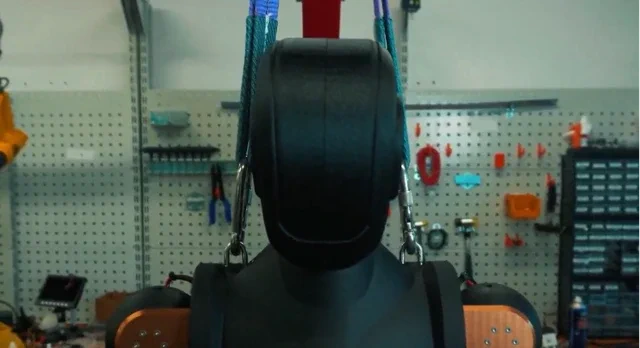
In the increasingly crowded Thunderdome of humanoid robotics, startup Asimov Inc. just tossed in a couple of new ideas: a see-through skull and a promise to give all its blueprints away for free. The company announced via X that it has nearly completed the full-body assembly of its namesake robot and is now testing head designs with a transparent dome, intended to let you “see the agent’s emotional state through expressions inside.”
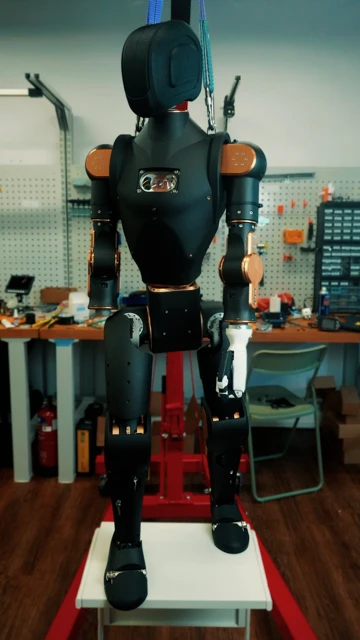
The update included a photo of the nearly complete bot, a sleek black and copper affair that looks ready to step off its assembly stand. This reveal follows through on Asimov’s radical commitment to developing its entire humanoid platform in the open. The company has previously released the designs for its bipedal legs and aims to create an entire open-source ecosystem, from hardware and a dedicated “Asimov OS” to a decentralized supply chain. The goal is to allow anyone to build their own version for under $25,000 using off-the-shelf components and 3D-printed parts.
Asimov also shared concept art for the robot’s hands, showcasing various three- and four-fingered designs focused on dexterity. This is a critical area of development as humanoids are expected to handle tasks in environments built for people.

Why is this important?
While competitors like Boston Dynamics, Figure AI, and Tesla keep their technology under tight wraps, Asimov is betting the farm on the open-source playbook that built the modern software world. By making its designs public, the company could galvanize a global community of developers and researchers, potentially accelerating innovation far beyond what a single, secretive company can achieve. This strategy has proven immensely successful for platforms like the Robot Operating System (ROS), which has become a standard in robotics development.
The transparent head is more than just an aesthetic choice; it’s a direct attempt to solve the AI “black box” problem. As robots become more autonomous, understanding their decision-making process is crucial for trust and safety. Giving a visual cue to the AI’s “emotional state”—whether it’s confused, processing, or confident—is a novel approach to human-robot interaction. It’s a feature that’s either a brilliant stroke of genius or a one-way ticket to the uncanny valley. Either way, in a market projected to be worth billions, Asimov’s transparent, open-source strategy is a bold move that no one can ignore.