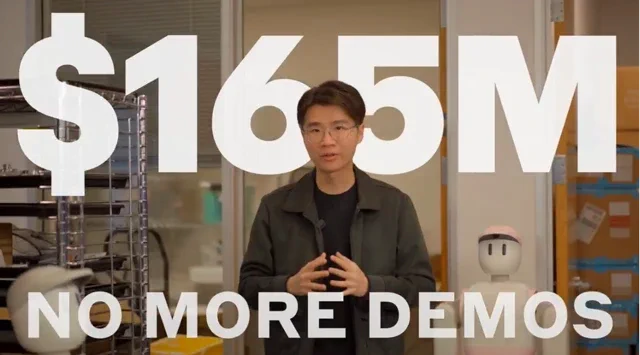
The robotics industry has a dirty secret: it runs on spectacular demos. For years, we’ve been treated to a highlight reel of robots backflipping, dancing, and delicately plating food in pristine lab environments. The problem? Most of these mechanical marvels are about as autonomous as a sock puppet, and their chances of showing up in your messy, unpredictable kitchen are close to zero. Now, a startup named Sunday Robotics has swaggered onto the scene with a $165 million Series B check and a promise to kill the demo for good.
Their claim, which is either brave or profoundly foolish, is to deploy the “world’s first autonomous home robots into households this year.” Yes, this year. Backed by a heavyweight crew including Coatue, Bain Capital Ventures, and Tiger Global, Sunday isn’t just building another lab toy. They’re taking a nine-figure bet that they’ve cracked the code to making robots genuinely useful outside of a PowerPoint presentation. The company’s new $1.15 billion valuation suggests some very serious people believe them.
The Demo-to-Nowhere Pipeline
For those of us who have followed the industry, this skepticism is hard-earned. The path to home robotics is littered with the corpses of ambitious projects that looked incredible on YouTube but crumbled upon contact with reality. The core challenge has never been the hardware alone; it’s the intelligence. A real home is a chaotic hellscape of dropped socks, unpredictable pets, and coffee tables that mysteriously move. An effective home robot needs to navigate this chaos with grace, not just repeat a pre-programmed routine.
This is what makes Sunday’s declaration so audacious. In their announcement, they state a simple truth: “deploying autonomous, dexterous manipulation in real-world homes has never been achieved.” They’re not just acknowledging the problem; they’re claiming to have solved it. And they’re inviting the public to watch, promising to “document the journey for all” as they roll out a public beta.
Sunday’s Secret Sauce? No Puppets, Just Practice.
So what makes Sunday think they can succeed where so many have failed? Their approach sidesteps the industry’s reliance on teleoperation—where humans remotely control robots to generate training data. As we’ve covered before, Sunday AI Skips Robot Puppets, Teaches Chores by Hand , Sunday’s method is more hands-on.
Founded by Stanford PhDs Tony Zhao and Cheng Chi, the company has developed a proprietary “Skill Capture Glove.” Instead of using joysticks, human data collectors wear these gloves to perform household tasks, generating a massive, high-quality dataset of how things are actually done. This data, collected from over 500 homes, is what powers the brain of their robot, named Memo. By focusing on the full stack—from hardware design to data collection and model training—Sunday claims it can achieve an industry-leading iteration speed.
“Data has always been the biggest bottleneck in robotics,” said Tony Zhao, CEO of Sunday. “We built the only pipeline that turns the complexity of real-world homes into autonomous intelligence at scale.”
Putting $165 Million Where Their Mouth Is
This massive funding round is more than just a vote of confidence; it’s rocket fuel for an incredibly ambitious timeline. Deploying a beta version of a complex, autonomous robot into real homes within months is a logistical and technical nightmare. It’s a challenge of safety, reliability, and managing user expectations.
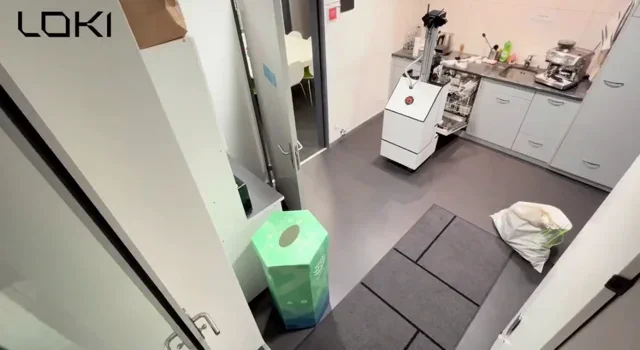
The company’s robot, Memo, is designed with these challenges in mind. It uses a rolling base for stability, avoiding the inherent risks of bipedal designs that can, you know, fall over. The goal isn’t to build a flashy humanoid but a practical assistant that can handle chores like loading a dishwasher, folding laundry, and tidying up.
The ultimate question is whether Sunday’s data-centric approach can truly bridge the gap from controlled demo to chaotic reality. The robotics industry has made countless promises about the “home of the future.” Sunday Robotics has just raised $165 million and started a very public countdown clock on delivering it. Your move, Sunday. We’ll be waiting.